Silver & Charcoal Labrador Facts
Silver & Charcaoal Labradors have been a hot topic for years. While AKC recognizes Silver Labradors as Chocolates, and Charcoals as black, many out there are under the FALSE impression that Silver Labradors get their color from being bred with a Weimaraner. This wives tale began back in the 1980's, where the claim was that a kennel in Minnesota cross bred a Weimarenaer with a Chocolate Labrador- and got the silver color, which began both silver and charcoal labradors.
THIS IS 100% FALSE! Silver Labs first surfaced back in the 1950's, and were featured in Gun Dog magazine. Labradors were not recognized as a breed by the AKC until 1917, and were recognized in England in 1903. These dogs were predominately black, as the public preferred black. The black gene "B' is dominant over the recessive gene "b". Chocolates, "bb" is recessive & began to become more visible in the 1930's. Yellows also began to surface.
Silvers & Charcoals are simply the result of a recessive "D" gene on the D Locus. Recessive is a lower case "d." Virtually any dog, just like any person, can carry a recessive gene, & it can lay dormant for generations before surfacing.
False claims are commonly made that silver & charcoal Labradors have more health issues. The only thing that determines potential health issues is the DNA & orthopedics of a dog. All reputable breeders will do full panel DNA testing as well as orthopedic- OFA/Penn hip- on their breeding dogs. Stay away from breeders who do not do these tests & cannot give proof of them.
Trusted by Families Across the Country
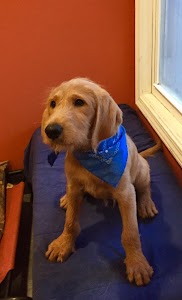


AKC has done full panel DNA testing on Silver Labs, only to conclude that they are pure bred Labradors, with a recessive dd gene, and not a DD gene, which would give the dog a chocolate color. A Weimaraner, along with other dog breeds, have the dd gene which is responsible for the diluted chocolate color, giving the dog a silver look. Many dog breeds carry this recessive gene, and if both parents carry at least ONE d copy, non dilute Labradors- meaning chocolates and blacks, can have offspring which are dilute color, as being silver or charcoal. Labradors can be "carriers" of the d gene- in other words- they can have a D Locus that is Dd. If two dogs with Dd were mated- some of the offspring would be chocolate or black, and others would be silver or charcoal.
Genetics and History of Silver & Charcoal Labs
Silver & Charcaoal Labradors have been a hot topic for years. While AKC recognizes Silver Labradors as Chocolates, and Charcoals as black, many out there are under the FALSE impression that Silver Labradors get their color from being bred with a Weimaraner. This wives tale began back in the 1980's, where the claim was that a kennel in Minnesota cross bred a Weimarenaer with a Chocolate Labrador- and got the silver color, which began both silver and charcoal labradors. THIS IS 100% FALSE! Silver Labs first surfaced back in the 1950's, and were featured in Gun Dog magazine. Labradors were not recognized as a breed by the AKC until 1917, and were recognized in England in 1903. These dogs were predominately black, as the public preferred black back then. The black gene "B' is dominant over the recessive gene "b". Chocolates began to become more visible in the 1930's. Yellows also began to surface.
AKC has done full panel DNA testing on Silver Labs, only to conclude that they are pure bred Labradors, with a recessive dd gene, and not a DD gene, which would give the dog a chocolate color. A Weimaraner, along with other dog breeds, have the dd gene which is responsible for the diluted chocolate color, giving the dog a silver look. Many dog breeds carry this recessive gene, and if both parents carry at least ONE d copy, non dilute Labradors- meaning chocolates and blacks, can have offspring which are dilute color, as being silver or charcoal. Labradors can be "carriers" of the d gene- in other words- they can have a D Locus that is Dd. If two dogs with Dd were mated- some of the offspring would be chocolate or black, and others would be silver or charcoal.